


Natural folk remedies are quite effective for onychomycosis in its early stages.Most of them, used at home, really help to get rid of the disease.
Hydrogen peroxide perfectly removes toenail fungus in an advanced (chronic) form, but the treatment will take quite a long time.In the process of removing the pathology, dermatologists recommend lubricating healthy nails with perhydrol every day (once every 2 days) to prevent their infection.
So how do you cure advanced nail fungus with hydrogen peroxide?
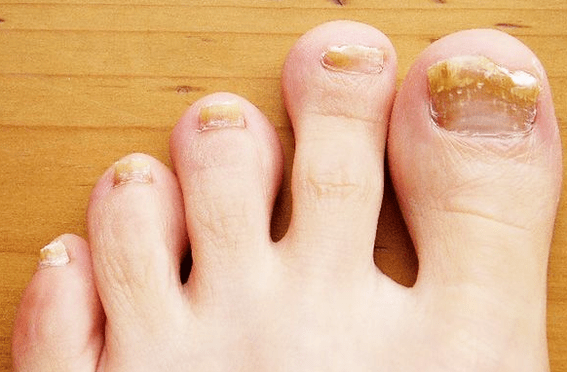
- Method 1. Steam your feet in a basin (bucket) and try to remove (cut, scrape) the affected crust from the nail plates.Dip a gauze pad in perhydrol and apply to the treated nail.Wrap the top with film.Repeat the procedure twice a day until a healthy nail plate grows.
- Method 2. Combine perhydrol with apple cider vinegar in equal amounts.Soak a gauze napkin with the resulting composition and apply it to the nail corroded by the disease.Wait for the foam effect to finish.Rinse your feet with running water and dry them thoroughly.Then, apply the pharmaceutical medicine prescribed by the doctors.
- Method 3. Steam your feet in hot water with the addition of liquid laundry soap or copper sulfate and dry.Place a cotton pad, generously soaked in peroxide, on the affected nail, cover it with a piece of film and secure it with a strip of bandage.Leave the compress for 35-40 minutes, remove the softened tissue eaten by the fungus.Then, treat the surface with an antifungal medication prescribed by an infectious disease specialist.
vinegar
Treatment of advanced onychomycosis with vinegar (wine, apple) is a proven and effective method.To get the expected result it is important:
- Use a natural product without chemical additives;
- Preservation of dimensions in the composition;
- Follow the treatment plan;
- Use only your own stuff.
Taking acid baths
Prepare a basin (bucket) where you can easily place your feet.Pour warm water and vinegar into it (in equal amounts).Your fingers should be completely covered with the cleansing liquid.The duration of the session is 40-50 minutes.Sessions should be repeated until the damaged cornea is completely replaced.In the complicated stage of onychomycosis, baths should be performed with the simultaneous administration of pharmaceutical drugs prescribed by the mycologist.
Making compresses with vinegar
Pour 2 tablespoons into a bowl.spoon of apple cider vinegar, prepare a cotton swab (disc), plastic wrap.Dampen a cotton swab with vinegar, apply to the infected cornea and wrap (not too tightly!) with film.Leave it for 3-3.5 hours.The total duration of vinegar therapy is 2.5-3 months.You can stop the sessions only when the new nail plate is fully formed.Even a small amount of remaining infected tissue can cause the return of the pathological process.
We treat marigolds with iodine-vinegar mixture
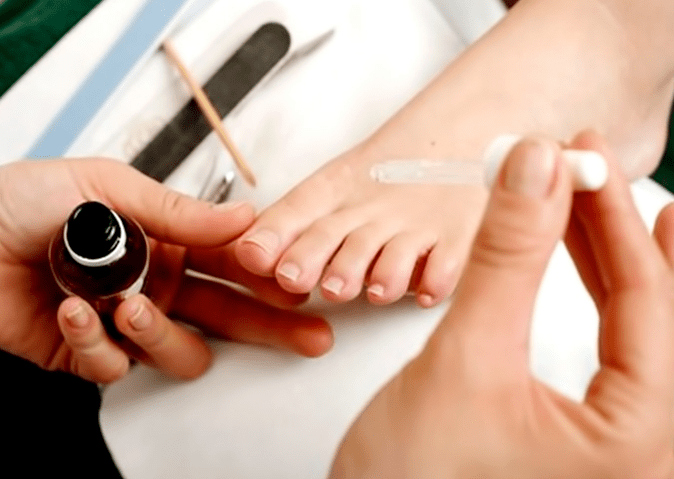
Treatment of advanced nail fungus with apple cider vinegar in combination with an alcohol solution of 5% iodine gives good results.The components are mixed in equal amounts.
Before treatment, the nail plates should be softened in hot water and the peeling parts should be trimmed.The prepared composition is applied with a cotton pad (shop) to the entire affected cornea, carefully grasping the side edge.Do not forget to coat healthy nails with the solution (using a different disc) to prevent infection.
Iodine
The effectiveness of the treatment of nail fungus with iodine in an advanced form has been confirmed by dermatologists and mycologists.What is the secret of the effectiveness of such a popular (and cheap!) method?Iodine can coagulate proteins.The parasites that destroy the horny plates have a protein structure and feed on keratin, a fibrillar protein.Therefore, iodine has the ability to "suppress" the mycoses, directly affecting it.
- Method 1. Apply one drop of solution (5%) to the nail plate twice a day.Also, do not ignore the neighboring nails - smear them with iodine once a day.Remember that the solution gives the nail plates an unsightly yellow tint.After 7-10 days, a strong burning sensation will appear in the damaged areas - a sign that the destruction of pathogenic microorganisms has begun.The entire course of treatment lasts 20-40 days.If the sensations are unbearable, treat the nails once a day.
- Method 2. Steam your feet for half an hour in very hot water with the addition of soda (1 tablespoon - 1 liter of water) and salt (double the amount).Pinch off the dead areas with tweezers or cut the dead areas with scissors, rinse with clean water and dry.Cover each affected nail plate (using a cotton pad or cotton swab) with three layers of iodine solution (after the previous one has completely dried).The procedure is performed before going to bed for 30 days.
The positive dynamics of treating nail fungus in a chronic (advanced) form with iodine is evidenced by numerous reviews of people who have used this method.
Before use, make sure you are not allergic to this medicine.Apply some oil on your wrist and leave it for 12 hours.
If no irritation occurs, you can safely use it.The entire course lasts two months and includes steam or direct application.For a bath, add 5 drops of oil per liter of water.The undiluted extract is applied with a cotton swab to the surface of the nail after steaming the feet in soapy water.
No need to wash it.
Essential oils
Did you know that some essential oils are famous for their excellent antifungal properties?For example, if an advanced form of nail fungus is diagnosed, then their treatment can be carried out using the following oils:
- Oregano (oregano) is one of the most effective natural antifungal and antibacterial agents.Carvacrol, a component of the oil, is known for its strong bactericidal properties.
- Tea tree - can cope with bacterial, viral, fungal infections, including old athlete's foot.
- Lavender - has an antiseptic, antifungal, regenerating effect.The properties are enhanced in combination with tea tree oil extract.
- Clove - contains the substance eugenol, which fights well against fungal parasites, etc.
Let's see how to treat advanced toenail fungus using oil concentrate:
- Wash your feet thoroughly using washing soap (tar, fir) and dry them.
- Apply all diluted essential products (except lavender oil).You can combine them with the following basic oils - jojoba, almond, olive.
- Procedures are performed every day for 2-3 months.
- You can improve the effect of healing oils by combining them with baths and pharmacological preparations.
Proven recipes:
- Recipe 1. Combine 100 ml of heated vinegar (9%), 6 drops of tea tree oil, 2 drops of oregano oil.Add the composition to a container of warm water.Keep your feet in the healing font for 20 minutes.Please note that the water should wash your joints.
- Recipe 2. Mix 10 drops of lavender oil, 6 drops of tea tree with 4 teaspoons of apple cider vinegar.Pour the mixture into a dark glass container and shake well.Add 30 ml of cooled boiled water and shake well again.Apply the resulting lotion to the damaged nails 3 times a day.Shake the composition well before each use.
- Recipe 3. Measure 2 tbsp.spoon of talc or 2 tbsp.spoon of cornmeal and pour into a plastic bag.Add 15 drops of lavender oil and 5 drops of peppermint essential oil.Tie the bag (seal), shake well and leave for a day.Apply it not only to infected nails, but also to the whole foot after cleansing baths.
- Recipe 4. Mix 5 drops of lavender and tea tree oil and 1 tbsp.spoon of almond oil.Store in a dark glass container.Three times a day, moisten a cotton ball with an oil "cocktail" and apply to the affected areas.
To successfully cure fungus, you can use a simple budget remedy.There are many inexpensive options that actually work against fungal infections.
Traditional methods of fungal treatment cannot completely cure nail fungus, but their use significantly improves the patient's condition and relieves symptoms.
Traditional medicine is recommended to be used as an adjunct to drug treatment if approved by a dermatologist.
Soda and propolis
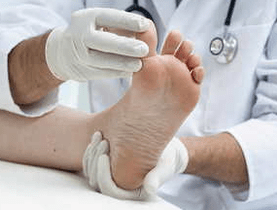
Baking soda is used for bathing or baking.For a bath, take 2 liters of water and add a small spoonful of baking soda.The diseased nail should be soaked in the solution for 10-15 minutes, then dry the foot completely.
To make the paste, take one tablespoon of baking soda and add some water to it.Then apply it to the affected nails and add a few drops of fresh lemon juice.The mixture is not washed off for 5-7 minutes.
Propolis has many healing properties, so it is a real assistant in the fight against plaque mold.If you apply propolis tincture with alcohol on your nails every day, this is guaranteed to accelerate the disappearance of the infection and restore the tissues.
Tincture can also be used to prepare baths.To do this, a spoonful of solution is diluted in a liter of hot water.The duration of the procedure is from 10 to 15 minutes, during which time the feet will steam and it will be possible to remove the affected layers of the nail plate.
Causes of the disease
Nail fungus or onychomycosis is a common disease that has an infectious form.It develops due to the active activity of microorganisms, of which there are about 50 types.
But for simplicity, they are divided into three groups:
- Dermatomycetes;
- mold;
- Fungi such as yeasts of the genus Candida.
The most common are dermatomycetes;Up to 90% of cases of nail fungus are associated with types of microorganisms included in this group.
The causes and conditions for the development of this disease can be:
- Non-compliance with the basic rules of personal hygiene;
- Contact with an infected person, as a rule, through any common object (comb, towel, slippers, manicure and pedicure tools);
- Weak immunity, for example, when taking antibiotics;
- Various diabetic diseases;
- Age over 60 years - according to statistics, nail fungus most often appears in people of this age;
- Damaged blood supply to the extremities, for example, varicose veins;
- The presence of fungal formations on the skin and inside the body.
In addition to the above, the following factors contribute to the development of nail fungus:
- Severe mechanical damage to the nail plate and finger injuries;
- Long-term exposure to negative chemical factors;
- Increased sweating, wet and cold extremities with VSD;
- Flat feet, synthetic and narrow shoes, that is, everything that leads to a small distance between the toes;
- The humid and warm climatic conditions of the area;
- Professional costs: manicurists and pedicurists, dermatovenerologists are more at risk of developing nail fungus;
- Frequent visits to public places, especially with wooden floors and high humidity in the premises (gyms, baths and saunas).
Don't panic though;just because you go to the gym often or if you're approaching sixty doesn't mean you're bound to get nail fungus.
Like any disease, nail fungus has symptoms even in the early stages.
You should be concerned and see a doctor if:
- You constantly feel itching of your fingers, especially their tips;
- Redness and other changes in the color of the skin around and under the nails;
- Growth, peeling, deformation and fragility of nails;
- Changing the color of your nails.
In later stages, symptoms become more severe:
- More painful itching;
- Strong burning sensation;
- The nail crumbles or, conversely, thickens (depending on the type of fungus);
- Inflammation;
- wet limbs;
- Dysbacteriosis;
- General weakness and drowsiness.
If you notice any symptoms of nail fungus, you should immediately contact a dermatologist for diagnosis.If the presence of fungus is confirmed, the dermatologist will determine its type and prescribe the appropriate treatment.
Once the feet are infected, the fungus takes some time to take root in the nail plates.The infection first affects the big toe and over a year or more, destroys the nail structure.This process is accompanied by the following symptoms:
- plaque thickening (tissue keratinization increases);
- color change (the plaque becomes yellow, black or brown);
- crumbling of the edge (in the absence of treatment or its incompleteness, the fungal infection spreads throughout the thickness of the nail, as a result of which it corrodes and crumbles);
- itching of the skin surrounding the nail;
- unpleasant smell coming from the feet.